


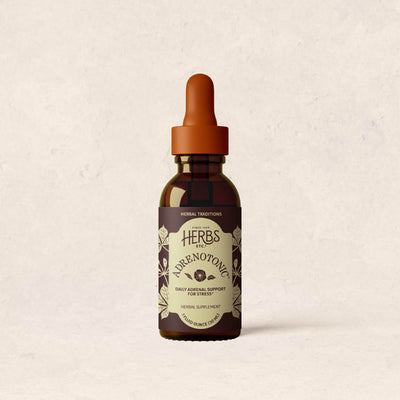
Your Herbal Questions, Answered.
Herbal medicine can feel complicated, but it doesn’t have to. Whether you’re wondering how to choose between a tincture and softgel, why some herbs are used fresh while others are dried, or how to make herbal support part of your everyday routine, you’re in the right place. We’ve been working hands-on with medicinal plants since 1969. Consider this your place to ask questions, understand your herbs, and make more informed choices about your wellness.
We know our plants. We know our farmers. We know our craft.
Getting Started with Herbal Medicine
What is herbal medicine?
Herbal medicine is the practice of using plants and their naturally occurring constituents to support health and wellbeing. Herbalists look beyond an individual ingredient – we consider the plant, the part being used, how it was grown and harvested, how it’s extracted, and how different herbs work together within a formula.
Herbal medicine and modern pharmacology are historically intertwined because many conventional drugs were first derived from plants. Herbal medicine also sits at the center of several major traditional systems, such as Traditional Chinese Medicine, Ayurveda in India, and various Indigenous and folk healing traditions around the world. In these systems, herbs are often combined in specific formulas and prescribed according to a broader philosophy of health and balance.
At Herbs, Etc., we have practiced this craft since 1969, combining traditional herbal knowledge with modern botanical science under a lineage of esteemed medical herbalists.
How do I understand what my body actually needs?
This is where herbalism really begins. Rather than treating a symptom as a nuisance, herbalists tend to see it as information – a signal worth listening to. Restless sleep, low energy, sluggish digestion, or feeling run-down at the change of seasons can each point to something upstream that’s asking for support.
Building that picture is worth doing well, and it usually draws on more than one source: your own day-to-day observations of how you feel, patterns you notice over time, conversations with your doctor or healthcare provider, and, when it’s helpful, appropriate testing to fill in what you can’t see on your own. No single one of these tells the whole story; together they help you understand your body as a system rather than a list of complaints.
Once you have that clearer picture, choosing herbal support becomes far more intentional because you’re supporting a body you understand.
How do I know which herbal product is right for me?
Start with what you want to support rather than with a particular herb. Are you looking for help with restful sleep, everyday stress resilience, digestion, seasonal wellness, respiratory health, or something else?
From there, look for a formula built around that need. Herbs, Etc. formulas bring complementary herbs together, chosen to work as a whole, so you don’t have to assemble a regimen from individual plants on your own.
And if you’re not sure where to begin, that’s exactly what we’re here for. After more than fifty years of this work, a short conversation about what you’re experiencing is often the fastest way to the right formula – ask one of our herbalists!
How long does it take for herbal supplements to work?
It depends on the formula, the herbs, your individual body, and why you are taking them. Some herbal formulas are designed for situational support, while others are intended to become part of a consistent wellness routine.
Always follow the Suggested Use on the individual product label. Herbalism is not about taking more for a temporary band-aid effect – it’s about using the right plants, in the right preparation, for the right purpose.
Can I take more than one Herbs, Etc. product at the same time?
Oftentimes different formulas can complement one another, but more is not automatically better. Each Herbs, Etc. product has its own Suggested Use and cautions. If you are building a multi-product routine, particularly if you take medications or manage a health condition, speak with your healthcare practitioner.
Choosing the Right Product & Format
What’s the difference between a tincture and a softgel?
Think of them as two ways to experience the same herbal craft.
Liquid Extracts (Tinctures)
A fast, flexible way to take herbs in liquid form. Tinctures are easy to adjust according to the product directions and are absorbed in the body quickly. They are also great if you would like to take a half dose or partial dose. Fair warning, not everyone enjoys the taste of tinctures, but the taste does grow on you! And if you’re an herb nerd like us, you may enjoy tasting the plants in their authentic form.
Softgels
A convenient, pre-measured way to take the same herbal extracts. They’re easy to swallow, taste-free, and ideal for a simple daily routine. We remove the alcohol and water, concentrate the extract, and encapsulate that liquid concentrate in-house.
It’s essentially the same herbal philosophy, just a different ritual. Choose the format that fits your routine and that you’ll use consistently.
Are liquid herbal extracts better than softgels?
Not better, but different. At Herbs, Etc., the choice is really about how you want to experience the plant, because both formats begin from the same carefully-made extract.
A liquid extract connects you directly to the herb through its flavor, character, and sometimes its intensity. For many people that taste is part of the ritual, and with certain herbs the flavor is even part of how they work. Liquid extracts are technically absorbed faster in your body than softgels, but even our softgels are absorbed faster than other herbal capsules you may find in the market. Some people prefer a softgel because it is tasteless, pre-measured, and simple – take it and go. A liquid also lets you adjust drop by drop, where a softgel gives you the same amount every time.
As for potency and effectiveness, format matters less than most people expect. How well an herb serves you comes down to the quality of the plant, how it was extracted, the dose, and more than anything, taking it consistently over time. What makes the real difference is starting from a true extract rather than a pre-ground botanical powder, where the plant’s constituents are still locked in the raw material.
Every Herbs, Etc. product begins from an extract of fresh or whole dried herbs, not powders shipped from overseas. Because both formats are built from that same extract, both carry the plant’s full spectrum of alcohol- and water-soluble phytonutrients and active constituents. And for the many plants we tincture fresh, we capture the delicate phytonutrients and volatile oils that begin to fade as a plant dries and sits in storage, so you’re getting the plant’s full chemistry, in whichever form you choose.
So choose the format that fits your life and that you’ll genuinely reach for. With herbs, consistency is what lets them do their gentle, cumulative work.
What is the difference between a liquid extract and a tincture?
The terms are often used interchangeably. A tincture is a type of liquid herbal extract traditionally made using alcohol and water to extract phytonutrients or constituents from plant material.
At Herbs, Etc., you will often see the term Classic Liquid Extract for our alcohol-containing herbal preparations and Non-Alcohol Liquid Extract for applicable alternatives.
Why is there alcohol in herbal tinctures?
Because it’s the finest tool we have for the job, and herbalists have known it for centuries. Alcohol is the “OG” of herbal extraction for a simple reason: a blend of alcohol and water draws out a wider range of a plant’s constituents than either one alone. Water pulls things like minerals and mucilage, while alcohol unlocks what water can’t reach – resins, essential and volatile oils, and many of the alkaloids that give a plant its character. (Some constituents, like tannins, are happy in either one.) Extract with water alone and you leave part of the plant behind; use alcohol and water together and you capture the fuller picture.
This is where our lineage shows. Michael Moore, the esteemed herbalist who founded Herbs, Etc., taught that the right amount of alcohol depends on the individual plant. For example, a resinous root calls for a different menstruum than a delicate, water-loving leaf. We still formulate that way, matching the extraction to the plant.
It’s also why we don’t reach for shortcuts. Glycerin, for example, is gentle but a poor menstruum because it extracts only a handful of herbs well, so glycerin-only tinctures tend to leave much of the plant behind. Others use harsh industrial solvents like hexane. We choose clean, food-grade alcohol because it does the most complete job and even when we make an alcohol-free extract, we still begin with a full alcohol extraction and remove the alcohol afterward. It takes more time and care, but it makes a more complete extract. (More on that just below.)
Alcohol does a second quiet job, too: it’s a natural preservative and part of how our Classic extracts stay stable and shelf-steady for years, without refrigeration and without artificial preservatives.
And if alcohol isn’t right for you, we’ve got you covered – see our non-alcohol options.
What is the difference between alcohol-based and non-alcohol liquid extracts?
The real difference is how the plant was extracted and it’s bigger than the label suggests.
Most “alcohol-free” tinctures on the market are made by extracting the herb in vegetable glycerin from the very start. Glycerin is gentle and naturally sweet, but it’s a weaker solvent than alcohol because it can’t pull the full range of a plant’s constituents. So a glycerin-only extract often leaves part of the plant behind.
We do it differently. First we extract the herb in alcohol, because alcohol captures the broadest spectrum of the plant’s constituents (for all the reasons above). Then we gently remove the alcohol through a cold, low-heat process that protects those delicate constituents and we add vegetable glycerin afterward, as a natural carrier and preservative. The result is a non-alcohol extract that still began as a full-spectrum alcohol extraction, so you’re not trading away the plant’s chemistry just to skip the alcohol.
That’s the difference between our two liquid formats:
- Classic Liquid Extract — extracted and preserved in alcohol and water; our traditional, full-strength preparation.
- Non-Alcohol Liquid Extract — the same full-spectrum extraction, with the alcohol gently removed and glycerin added. Many people reach for it for children, during pregnancy or nursing (with a practitioner’s guidance), for sensitivity to alcohol, or simply out of preference.
Can I mix liquid herbal extracts with water, juice, tea, or a smoothie?
Yes, and taking your drops in a little water is one of our favorite ways to enjoy them. Adding your liquid extract to a small glass of water, juice, or another non-alcoholic beverage softens the intensity of a concentrated extract, makes the flavor more approachable, and helps the herbs disperse and move gently through your system. A little fluid also simply makes the daily ritual easier to keep up and consistency is what herbs reward.
If you’re using a Classic (alcohol-based) extract and would like to soften it further, add your drops to a few ounces of warm water; some of the alcohol will dissipate before you drink.
One gentle exception: if the herb is a bitter meant to be tasted, like our Daily Herbal Bitters, a little water is better than a large, sweet drink because you’ll want to keep some of that flavor rather than mask it completely. The flavor, in this case, is part of the remedy.
Always follow the individual product’s Suggested Use. And for a refreshing way to enjoy your tinctures, try mixing them into ChlorOxygen® Lemonade (find out more here).
Taking & Storing Your Herbs
When is the best time of day to take herbal supplements?
The product label always comes first.
Different formulas are designed for different moments. A sleep formula naturally belongs near bedtime; bitters are usually taken just before meals, when they can prime digestion; and more energizing formulas are often best earlier in the day. Some herbs also sit more comfortably taken with a little food, while others are suggested between meals, another reason to follow the Suggested Use for your specific formula rather than applying one rule to every herb.
And don’t let perfect timing get in the way of consistency. Herbs do their best work when taken regularly, so the best time is often simply the time you’ll remember day after day.
Do I need to take herbs every day?
It depends on the formula. Some herbs and formulas are best suited to consistent daily use, while others are designed for particular moments or seasonal needs.
It helps to remember that herbalism usually isn’t an overnight, quick-fix approach. Rather than masking a moment, herbs tend to work gradually and gently, supporting your body’s own balance over time which is why, for many formulas, steady daily use is where the real value lies. Think of it less as a universal schedule and more as learning when different botanical allies belong in your life.
And herbs do their best work as part of a bigger picture. Pairing your formulas with the everyday foundations of wellbeing like good sleep, nourishing food, movement, and managing stress lets your herbs complement a healthy life rather than stand in for one.
Can I take herbs long-term? Should I take breaks?
It depends on the herb. Gentle, nourishing tonics and many adaptogens are well suited to steady, long-term use as they work slowly and build over time. More targeted or stimulating formulas are meant for a season or a specific purpose, not indefinitely.
There’s an important nuance, though: some herbs are meant to be steady companions. Nervines and nervous-system tonics in particular tend to do their best work taken consistently, day after day. If you’re feeling calmer, more rested, or more resilient, that’s often a sign the herbs are doing their job (not a cue to stop). With these, feeling good is a reason to keep going, not to put the bottle away.
For herbs that don’t call for daily use, we’re fans of the occasional break – a few days off, or a week between longer stretches – to check in and notice how you feel on your own. As Michael Moore taught, herbs are tools for a purpose, not permanent fixtures: the aim is to help your body find its balance. For some, that balance means a season of support; for others, it means steady, ongoing nourishment.
A good rule of thumb: follow the Suggested Use on each formula, and if you’re taking something for the long haul, especially alongside medications or an ongoing health condition, check in with your healthcare practitioner or ask one of our herbalists.
How should I store herbal tinctures and softgels?
Store Herbs, Etc. products according to the directions on the package. In general, keep containers tightly closed and away from excessive heat and direct sunlight. Always follow the expiration date printed on the product.
Do herbal tinctures need to be refrigerated?
Generally, Herbs, Etc. liquid extracts and softgels do not require refrigeration. Store them according to the directions on the packaging, away from excessive heat and direct sunlight.
Understanding the Herbs Inside
Why does Herbs, Etc. use herbal formulas instead of mostly single herbs?
Because herbalism is about relationships.
One plant may bring one set of constituents, another may complement its action, and another may help balance the energetics of the formula.
Our expert herbalists formulate with those relationships in mind, considering not only what each plant contributes, but why these particular plants belong together.
Think orchestra, not soloist.
We also formulate this way because every ‘body’ is different. We each have our own constitution, and the same herb can suit one person beautifully while doing less for another. Valerian might be Billy Bob’s sleep ally, while Passionflower is Sally Sue’s. A single-herb product asks you to guess which one is yours; a thoughtful formula doesn’t. Deep Sleep®, for example, brings both Valerian and Passionflower together, so it offers each person a variety of calming, sleep-supporting botanicals, and your body can respond to the ones that suit it best.*
That’s the quiet advantage of a multi-herb formula: rather than relying on a single plant, you’re met with a fuller spectrum of complementary phytonutrients, so one formula has a better chance of helping more people. And isn’t that what it’s all about? Helping as many people as possible.
What are adaptogenic herbs?
Adaptogens are a category of herbs commonly associated with supporting resilience and the body’s response to occasional stress. They adapt to each individual to bring them back to balance. For example, when Sally Sue gets stressed, she may get frazzled and frantic. When Billy Bob gets stressed, he may get overwhelmed and shut down (aka lay on the couch). Adaptogenic herbs can help both Sally Sue and Billy Bob. An adaptogenic herb will help Sally Sue calm down so that she can deal with stress in a manageable way. That same herb can give Billy Bob the energy and focus he needs to get up off the couch and deal with his stress. Same herb, different individualized actions, but same outcome: handling stress better. Examples found across Herbs, Etc. formulas include botanicals such as American Ginseng, Eleuthero, Ashwagandha, and Schisandra.
But “adaptogen” is not a magic word. An herbalist still considers the individual plant, preparation, dose, and the other herbs surrounding it.
Discover our favorite formulas with adaptogens:
What are nervine herbs?
Nervines are herbs traditionally associated with the nervous system. Depending on the plant, herbalists may use them when formulating around relaxation, nervous-system nourishment, or restful sleep.*
Herbs such as Passionflower, Lemon Balm, Milky Oats, and Valerian are examples you will encounter in Herbs, Etc. formulas. Think of them as a soothing balm for your soul :)
Why does the part of the plant matter?
A root is not interchangeable with a leaf, and a berry is not interchangeable with a flower.
Different parts of a plant can contain different concentrations and combinations of botanical constituents or phytonutrients. That is why our labels do not simply say “Echinacea” or “Ginseng” – you will see exactly which plant and plant part we have chosen.
Knowing your herbs means knowing which part matters. For example, take the Great Mullein. You will find Mullein Leaf in many of our immune and respiratory formulas because the Leaf has a wonderful affinity for the lungs. However, you would not use Mullein Flowers for the respiratory system. We use the Mullein Flower in our Mullein Garlic Ear Drops because the flower works very well topically in an oil for inflammation and aches. Same plant, but two different plant parts with two different uses.
How do I read an herbal supplement label?
Once you know what to look for, an Herbs, Etc. label tells you the whole story of what’s inside:
- Botanical (Latin) name
- Alongside the common name, you’ll see the plant’s scientific name, like Echinacea purpurea. Common names can be shared by very different plants, so the Latin name tells you exactly which one you’re getting.
- Plant part
- Root, leaf, flower, berry, or seed. It matters more than you’d expect, because different parts of the same plant carry different constituents. It’s why our labels say “Mullein Leaf,” not just “Mullein.”
- Preparation
- How the herb became medicine: a Classic Liquid Extract (alcohol-based), a Non-Alcohol Liquid Extract, or a softgel and whether the herb was used fresh or dried. Remember, when we say “fresh” on the label, that means the plant went from the soil to our facility for extraction within 24 hours!
- Suggested Use
- Your serving size and how often to take it. Always the first place to look.
- The organic “¹”
- A small superscript ¹ beside a plant means it came from one of our certified organic partner farms. If you don’t see a superscript ¹, that likely means that plant was wildharvested by one of our amazing land stewards.
- Other Ingredients
- Everything beyond the herbs themselves: the vegetable glycerin, water, or a softgel’s components. If you’re checking for a specific ingredient, this is the line.
- Cautions
- Any considerations for that particular formula. Worth reading before you begin, especially if you take medications or are pregnant, nursing, or shopping for a child.
How Herbs, Etc. Makes Herbal Medicine
How can I tell if an herbal supplement is high quality?
- Organic or responsibly wildharvested ingredients. How a plant is grown or gathered shapes what ends up in the bottle.
- The right plant part. A root, a leaf, and a flower aren’t interchangeable; a quality brand tells you exactly which one they used.
- The right preparation. Whether the herb was used fresh or dried, and extracted in a way that suits its chemistry.
- Real relationships with growers. Does the brand actually know its farmers and its land, or just its distributors?
- True manufacturing expertise. Do they make the product themselves? (We do, right down to pouring our own softgels in-house, rather than outsourcing the hard part.)
- Herbal lineage. Are they an herbal company or a marketing company? Do they have roots in the herbal community, are there expert herbalists doing the formulating, or are they assembling kitchen-sink formulas to chase a trend?
Here’s the hard truth: there’s no single badge or certification that tells you all of this. Plenty of products wear a wall of certifications, but a badge doesn’t mean a company formulated the product, knows where its ingredients came from, knows its farmers, or even knows how to make what’s inside. They may know marketing. That doesn’t mean they know herbs.
We’ve been at this for 57 years, and we’ve watched the whole industry transform. Herbal medicine used to be counterculture with nobody but the hippies caring (trust us, we were born in 1969; we remember). But as interest has grown, so has the money and so have the imposters looking to capitalize on it. There have never been more than there are today. That’s why it pays to stay curious and do your homework: now more than ever, the most powerful thing you can do is vote with your dollar.
What makes Herbs, Etc. different from other herbal supplement brands?
We do not just put our name on herbal products. We make them.
We identify the plants. We work with the growers. We receive whole herbs rather than pre-ground botanical powders. We grind them in-house. We extract. We formulate. We manufacture in Santa Fe.
We have been practicing this craft since 1969.
We know our plants. We know our farmers. We know our craft.
Some brands know marketing. We know herbs. And we wouldn’t have it any other way.
(Fun fact: even though we were founded in 1969, we just got social media in 2025. It was never about the marketing. It has always been about the plants, people, and planet.)
Are Herbs, Etc. products made in the USA?
Yes. We craft our products in Santa Fe, New Mexico where we’ve made herbal medicine since 1969. We grind, extract, formulate, and bottle in-house, right here in the high desert.
Our plants come from many places: certified organic partner farms across the country, herbs wildharvested from American landscapes like the Rocky Mountains and Appalachia, and a handful of botanicals sourced from the parts of the world where they grow best. Wherever a plant begins, it becomes medicine here under our roof, by our hands, to our standard.
How does Herbs, Etc. identify its herbs?
Before a plant becomes medicine, we want to know exactly who it is.
We use botanical standards and organoleptic evaluation which means our team examines characteristics such as appearance, aroma, texture and, where appropriate, taste.
We source whole or cut-and-sifted herbs rather than accepting pre-ground botanical powders, allowing us to evaluate the plant before processing it.
If a plant cannot introduce itself properly, it does not make it into our formulas.
Why does Herbs, Etc. use fresh herbs in some formulas and dried herbs in others?
We choose the form that makes the most sense for the plant and the constituents we want to preserve and often, that means fresh. A lot of companies default to dried herbs for everything. We go out of our way to work with fresh plants whenever it matters, because for some herbs, freshness is everything.
Take aromatic, above-ground herbs: for example, Lemon Balm, Lavender, and Chamomile are delicate plants whose beneficial volatile oils and fragile constituents live on the flowers and leaves of the plant (the aerial parts) and these start to degrade and evaporate as soon as they’re cut. Thus, we extract them fresh, capturing that potency before it’s lost to drying and time. It’s the same reason you’d never make pesto with dried basil: basil’s bright, aromatic punch comes from those very volatile oils, and drying mutes that vibrancy into something flatter. Fresh is what keeps the flavor alive and, in our case, the beneficial constituents right along with it.
That’s why, when our label says “fresh,” it means the plant went from field to extraction in our facility within 24 hours. (Ever picked a sprig of Rosemary or Peppermint and caught that scent? That’s the volatile oils at work and we’re not about to let them evaporate on our watch. ;))
Hardier plant parts are a different story. Roots and seeds don’t carry those same volatile oils (ever seen a bouquet of roots on a kitchen counter?). The phytonutrients of roots and seeds are often locked within the root, not hanging out on the outside. They are much hardier than flowers and leaves, so for these plant parts we use whole dried herbs, since the constituents are stable and concentrated. When we use these plant parts, we grind them in-house and for roots we use a proprietary Cryogenic Grinding process, so no damaging heat ever touches the active constituents.
We don’t choose fresh or dried because one is universally better. We choose based on the plant and the plant part we’re partnering with. But I will say… do you know many brands that are overnighting their plants to their facility for extraction to protect those volatile oils? We don’t either…
Learn more:
What does wildharvested mean?
Wildharvested herbs are gathered from their natural growing environments rather than cultivated fields. Responsible wildharvesting considers the health of the plant population, the surrounding ecosystem, and the ability of the plant community to regenerate. Many of our wildharvesters have been working with us for decades and they are true stewards of the land. They tend the land, not just individual plants.
For Herbs, Etc., sourcing is about maintaining a respectful relationship with the places and people behind the plants. That’s why we co-created a set of Wildharvesting Ethics that we practice internally and share with the harvesters who gather for us. These principles guide how and when plants are gathered, so that wild plant communities and the traditions they come from are cared for and able to thrive for generations.
Are Herbs, Etc. herbs organic?
Plants grown without chemicals matter to us. We prioritize certified organic herbs and use them wherever quality and availability allow, because how a plant is grown (the soil it comes from and what it’s exposed to) shapes the medicine in the bottle. In fact, we partner with many Organic and Regenerative Organic Certified (ROC) farms around the country. If you see a superscript “1” next to a plant on our label, you will know it came from one of our amazing partner organic farms.
However, some of our botanicals are wildharvested rather than farmed, and that’s not a step down from organic, it’s just a different path to the same standard of purity. These plants grow in their natural environments, free of synthetic inputs, and are gathered responsibly with the health of the plant community in mind. For certain herbs, the wild is simply where they’re at their best. For instance, our Osha Root grows in the Rocky Mountains (usually between 7,000–12,000 feet). Our Wild American Ginseng thrives deep in the Appalachian forest. Wildharvested herbs cannot technically be ‘certified’ organic, but many would argue they are beyond ‘organic.’
Because the ideal source can vary from plant to plant, the specific product information will always tell you the sourcing for a given formula.
Ingredients, Dietary Needs & Safety
Are Herbs, Etc. products gluten-free?
We don’t formulate with wheat or other gluten-containing ingredients, so our formulas are made without gluten. That said, our products are not certified gluten-free, and they aren’t tested to a certified gluten-free standard. If you have celiac disease or a serious gluten sensitivity, we recommend reviewing the ingredients on the individual product page and checking with your healthcare practitioner and if you have a question about a specific formula, our herbalists are always glad to help.
Are Herbs, Etc. products vegan?
Many of our formulas are plant-based, but not all and there are two things to know.
First, our softgels are made with a shell of bovine gelatin, so none of our softgels are vegan. We’ve looked closely at the vegan alternatives, and we haven’t found one that holds up: a stable, reliable vegan softgel would mean relying on ingredients we’re not comfortable using, such as carrageenan. So we made a considered choice. The bovine gelatin we use is sourced in North America (the USA, Canada, or Mexico), is both Halal- and Kosher-certified, and comes from cattle that spend the majority of their lives grazing on grass and forage in pastures. If you’re looking for vegan options, our liquid extracts are the place to start.
Second, a few of our formulas intentionally include bee-derived ingredients, because they’ve been valued in herbal traditions for generations. You may see propolis (the protective resin bees gather from plants, long used in throat and seasonal-wellness formulas), bee pollen or royal jelly (traditionally used as nourishing tonics), or honey and beeswax (a natural sweetener or base). These are the hive-derived ingredients that make an otherwise plant-based formula non-vegan.
So if you’re looking for a fully plant-based option, look to our liquid extracts and check the label for any bee-derived ingredients – the individual product page will always give you the definitive answer.
Do Herbs, Etc. products contain artificial preservatives?
No. We don’t use artificial preservatives. Our Classic liquid extracts are naturally preserved by the alcohol used in extraction, and our formulas are made to keep their integrity without synthetic additives. You can always review the Other Ingredients section on any product page to see exactly what’s in a given formula.
Can I take Herbs, Etc. products with medications?
Herbs can interact with medications, and individual health circumstances matter. If you take prescription medications, manage a health condition, or are under medical care, talk with your healthcare practitioner before adding a new herbal supplement.
Always review the individual product’s Caution section before use.
Can I use herbal supplements during pregnancy or breastfeeding?
Pregnancy and breastfeeding are times to be especially thoughtful about herbs. Some botanicals may not be appropriate during pregnancy or nursing.
Always review the Caution section on the individual product page and consult your healthcare practitioner before beginning a new herbal supplement.
Can children take Herbs, Etc. herbal products?
Children’s needs and appropriate herbal amounts differ from adults. Before giving an herbal supplement to a child, review the individual product directions and consult a qualified healthcare practitioner or herbalist experienced in pediatric use.
Can Herbs, Etc. herbal products be given to pets?
While we do hear stories from our consumers about using our products on their pets, animals can respond differently to herbs than people. Do not apply human dosing guidance to pets. Consult a veterinarian or practitioner experienced in veterinary herbal medicine before giving an herbal supplement to an animal.
*These statements have not been evaluated by the Food and Drug Administration. These products are not intended to diagnose, treat, cure, or prevent any disease.